The bank made a Rs 67 crore net profit, up 21% from the previous year. Its deposits grew 8%, the loan book 10%. Net bad loans dropped from 7.53% to 6.07%. So why was the banker, who headed the bank, not promoted?

For KKR, IPL 2025 is slipping away rapidly. They need more than just a few tactical tweaks - they need clarity of leadership and bold but sensible changes in their playing XI.

While it's a do-or-die game for KKR, who must win all their remaining three matches to stay in playoffs contention, the match will be more about celebrating Dhoni's legacy than the result.

With India's EV penetration at just 2.5 per cent, the market presents an opportunity -- provided Tesla gets its pricing right.

Fundraising by Indian companies through equity and debt reached an all-time high in the financial year 2024-25 (FY25), according to data collated by primedatabase.com. Fundraising through debt stood at Rs 11.1 trillion in FY25, including contributions from InvITs (infrastructure investment trusts) and REITs (real estate investment trusts).
While SGBs are a sound investment, they aren't worth buying at any price. The interest income you earn from them will not justify paying a high premium.

Gold prices have been on an uptrend in the last few months, rising nearly 28 per cent to $2387 per ounce now. This rise in gold price, according to Christopher Wood, global head of equity strategy at Jefferies, is attributed to the demand from China amid lack of investor euphoria as regards the yellow metal. "Recent developments show a distinct lack of investor euphoria as regards gold, the question remains what is driving the current rally.

Housing sales are estimated to decline 23 per cent annually to nearly 1.06 lakh units during January-March across nine major cities on subdued demand due to high prices and concern over economic growth, according to PropEquity.

From high-end villas with private sommeliers to exclusive showcases at cultural centres to private sessions with Michelin-starred chefs and celebrities, hotel chains are pulling out all the stops

Moody's Ratings on Wednesday said US tariffs will weaken credit conditions and raise defaults risks especially for low-rated and speculative grade corporates. It said that an unpredictable US trade policy will lead to a deterioration in global credit conditions and macroeconomic impact will slow growth with a growing possibility of recession.
India's economic growth forecast for 2025 has been revised downward to 6.3 per cent, and despite a projected moderation, the country remains one of the fastest-growing large economies, supported by resilient consumption and government spending, the United Nations has said.

Dalal Street investors were a poorer lot on Monday as their wealth eroded sharply by Rs 14 lakh crore following a sharp decline in benchmark indices amid a global market meltdown due to recession fears. The 30-share BSE Sensex tumbled 2,226.79 points or 2.95 per cent to settle at 73,137.90. Intra-day, the benchmark slumped 3,939.68 points or 5.22 per cent to 71,425.01.

India, the world's third largest oil consuming and importing nation, spent 112.5 billion euro (about Rs 1.5 lakh crore) on buying crude oil from Russia since the start of the Ukraine war, a European think tank said on Thursday. The Centre for Research on Energy and Clean Air (CREA) released a report on payments to Russia for fossil fuels since February 24, 2022. "According to our estimates, since the beginning of the war, Russia earned EUR 835 billion in revenue from fossil fuel exports," it said.

A sharp correction in stock prices, signs of rural recovery, and lower raw material costs have not been enough to change brokerages' cautious stance on the top-listed paint companies. Concerns over rising competition and weak demand continue to weigh on sentiment.

Russia's state-owned oil firm Rosneft has agreed to supply up to 500,000 barrels per day (bpd) of crude oil to Indian upstream oil and gas major Reliance Industries (RIL) in the largest-ever energy deal between the two countries, Reuters reported on Thursday. The 10-year agreement amounts to 0.5 per cent of global oil supply and is valued at roughly $13 billion per year at current prices, it said.
S&P Global Ratings on Tuesday cut India's GDP growth projections to 6.5 per cent for the next fiscal as it expects that economies in the APAC region will feel the strain of rising US tariffs and pushback on globalisation. In its Economic Outlook for Asia-Pacific (APAC), S&P said despite these external strains, it expects domestic demand momentum to remain solid in most emerging-market economies.

'There is need for India-specific pricing.' 'Google, Microsoft and others also have different pricing.' 'It is important for OpenAI to think on these lines as the global pricing may not work in the Indian context.'

The RBI added roughly 3 tonnes in 2025, taking its gold reserves to 879 tonnes as of January 31, 2025.

Buying stocks during a dip, says Amar Nandu, research analyst, Samco Securities, can lead to higher compounding returns when the uptrend begins.
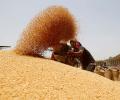
Wheat production during the current season is expected to be better than last year provided the weather remains favourable over the next few weeks, said senior industry executives. The weather had turned uncharacteristically hot in the latter half of last month, but owing to strong winds, the chill has returned in the last few days.
JSW Steel, owned by Sajjan Jindal, has emerged as the world's most valuable steelmaker, boasting a market capitalisation (mcap) of nearly $30.31 billion, according to Bloomberg data.

Retail inflation slowed to a four-month low of 5.22 per cent in December compared to 5.48 pc in November, mainly due to easing of prices in food basket, according to government data released on Monday. The inflation based on Consumer Price Index (CPI) was 5.48 per cent in November and 5.69 per cent in December 2023.

Ask rediffGURU and PF expert Milind Vadjikar your insurance, stocks, mutual fund and personal finance-related questions.

GMR Group-led DIAL, which manages and operates India's largest airport, recently requested the AERA to double the user development fee (UDF) for international business and first-class travellers compared to economy and premium economy over the next four years. It has also sought higher UDF for all domestic passengers flying during peak hours -- 5 am-8:55 am and 5 pm-8:55 pm.

Shares worth over Rs 50,000 crore (or approximately $6 billion) are set to become freely tradable between now and April 10. Historically, such substantial volumes have been absorbed by a buoyant block-deal market.

'Obesity is a raging conversation globally now, and manufacturing of generics will pick up after the patent expires.'

The official said there are both challenges and opportunities for India as many of its competitor countries in exports, such as China Vietnam, Bangladesh, Cambodia and Thailand, face higher duties.

Delhivery share price dropped 6.6 per cent to a low of ?295.8 per share on the BSE on Monday after analysts cut their earnings estimate on the stock, following weak results for the December quarter (Q3) of the current financial year (FY25). Q3 is a seasonally strong quarter due to festive pick-up in demand.

The National Stock Exchange (NSE) has deferred its plan to change the expiry day of all index and stock derivatives to Monday from Thursday until further notice following markets regulator Sebi's consultation paper. The shift, which was scheduled to take effect on April 4, 2025, would have seen all index and stock derivative contracts move from Thursday to Monday.

The October-December quarter (Q3FY25) results of fast moving consumer goods (FMCG) major Hindustan Unilever (HUL) indicated weak demand, with urban growth muted and rural showing recovery. Consolidated revenue grew by 1.6 per cent (volume was flat) to Rs 15,818 crore, due to price hikes. Prices of key raw materials such as palm oil and tea remained elevated, leading to compression of gross margin.
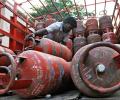
Prime Minister Narendra Modi on Friday announced a Rs 100 per cylinder cut in cooking gas LPG price to ease financial burden on households. Non-subsidised cooking gas price will be cut to Rs 803 per 14.2-kg cylinder in the national capital with effect from midnight of Friday/Saturday, official sources said. Prices vary from state to state depending on the incidence on local taxes.

Engineering and construction major Larsen & Toubro (L&T) reported a 25 per cent rise in net profit attributable to the owners of the company for the January-March quarter of 2024-25, owing to higher revenues and an exceptional gain. For the quarter under review, L&T posted a consolidated net profit of Rs 5,497.3 crore, while revenue rose 10.9 per cent year-on-year (Y-o-Y) to Rs 74,392.28 crore.

Anmol Singh Jaggi and Puneet Singh Jaggi, once hailed as rising stars in India's clean energy sector, are now facing serious regulatory action.
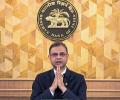
'A repo cut will be very good for the market as it will mean that everything is being done to spur growth in these uncertain times.'

'The slowdown in motor insurance premium growth is due to slower growth in vehicle sales. Also, there has been minimal hike in third-party rates in the past three years which is affecting the growth rate of third-party premiums.'

'It won't be a V-shaped recovery. It'll be consolidation.' 'Investors might exit during that grind. It'll be painful.'

'Indian players in the digital market should not be dominated by global players, and they should not dominate the smaller players -- these discussions are on.'

German luxury carmaker Mercedes-Benz on Friday said it will hike prices of its vehicles in India by up to 3 per cent on its entire model range in the portfolio from January 1, 2025, citing a rise in input costs, inflationary pressures and higher operational expenses. Prices of Mercedes-Benz cars in India will be revised by Rs 2 lakh for the GLC to Rs 9 lakh for the top-end Mercedes-Maybach S 680 luxury limousine, Mercedes-Benz India said in a statement.

Reserve Bank Governor Sanjay Malhotra on Saturday said that the market forces decide the value of rupee with respect to the US dollar and the central bank is not worried about day-to-day movement of the currency value.

The demand for gold is expected to take a hit if the price of the yellow metal - which has been hovering around Rs 60,000, a level never seen before - remains elevated. Due to a sharp increase in price in a very short time and the flow of smuggled gold continuing, gold price in Mumbai is quoted at around Rs 59,000 per 10 gram. Typically, overall demand in the January-March and July-September quarters is moderate-to-dull, which is the case in the ongoing period.
 © 2026 Rediff.com - Advertise with us - Disclaimer - Privacy Policy - Sitemap - Feedback - About us - Terms of use - Grievances